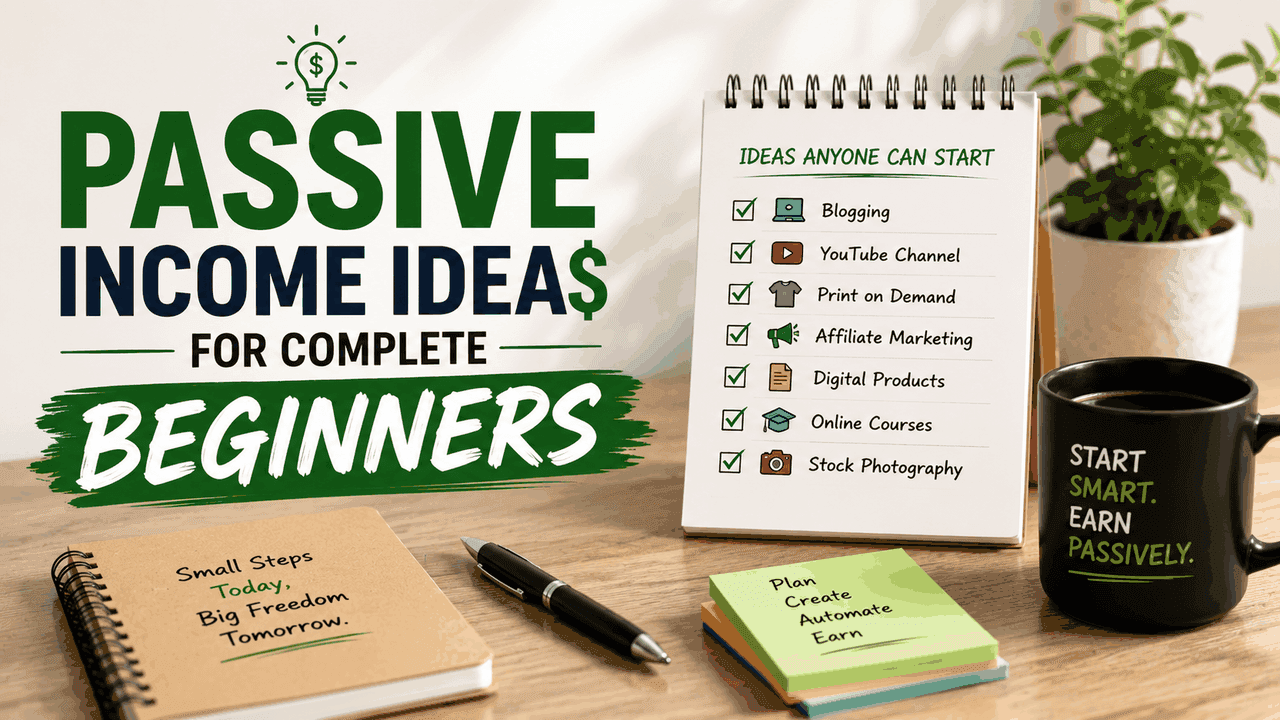
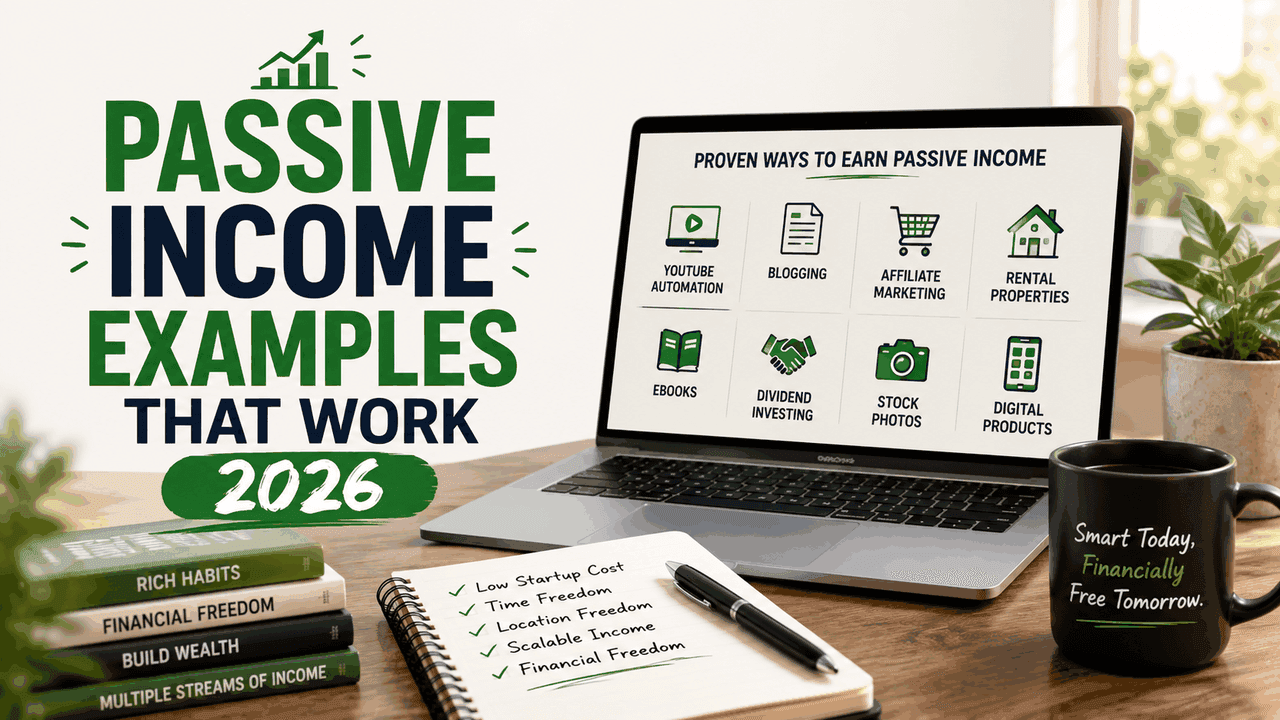
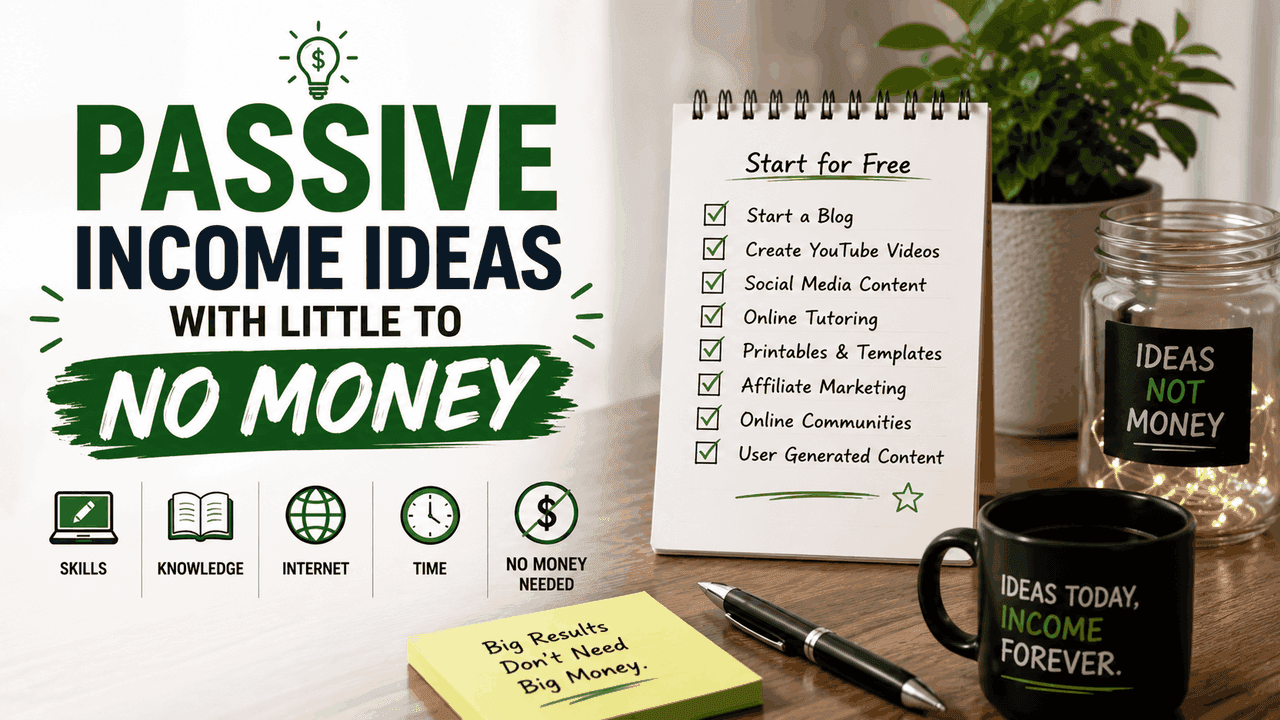
This guide organizes passive income ideas by what you actually need to start: zero capital, small capital ($100–$500), or moderate capital ($1,000–$5,000). Every idea includes real 2026 earning data, the honest upfront work required, and a realistic timeline to your first dollar. No hype. Just math.
What Makes a Passive Income Idea "Beginner-Friendly"
Not every passive income stream is suitable for someone starting from zero. Before diving into the ideas, here is the criteria used to rank them:
| Criteria |
Why It Matters for Beginners |
| Low or no upfront capital |
Most beginners do not have thousands of dollars to invest. Ideas that require significant capital are ranked lower or placed in later tiers. |
| Low technical barrier |
You should not need a computer science degree, a real estate license, or advanced trading knowledge to start. |
| Realistic time to first income |
Ideas that take 2+ years before paying anything are not beginner-friendly, even if the long-term potential is high. |
| Scalable without proportional effort |
The whole point of passive income is that income grows faster than effort. Ideas that pay purely by the hour are side hustles, not passive income. |
| Proven track record in 2026 |
Ideas backed by actual platform data, earnings reports, or documented case studies — not theoretical possibilities. |
💡 Pro tip: The best beginner passive income strategy is usually a combination of one fast-paying idea (to build momentum and cover small costs) and one slow-compounding idea (to build long-term wealth). Do not try to launch five streams at once. Pick one from Tier 1 and one from Tier 2, master both, then expand.
🌱 Tier 1: Zero Capital Required — Start With Time, Not Money
These ideas require no financial investment beyond a computer and an internet connection. They demand upfront time and effort, but they are genuinely accessible to anyone starting from zero.
1. Create and Sell Digital Products
Digital products — templates, spreadsheets, guides, printables, Notion dashboards — are the highest-earning-per-hour passive income stream for beginners with zero capital. The digital products market is projected to reach $920 billion by 2033, and individual creators on platforms like Etsy and Gumroad regularly report earnings from $500 to $5,000+ per month once established.
The model is simple: you create something once that solves a specific problem, list it on a marketplace, and every sale after that is pure profit. A $15 budget template that took you 10 hours to build and sells 20 copies a month generates $300 in revenue with no additional production time.
| Detail |
Info |
| Earnings potential |
$100–$5,000+/month once established |
| Upfront time |
10–40 hours per product |
| Upfront capital |
$0 (Canva free tier, Gumroad/Etsy free listings) |
| Time to first sale |
2–6 weeks |
| Ongoing effort |
2–5 hours/month (marketing, customer support, updates) |
| Best platforms |
Etsy, Gumroad, Teachers Pay Teachers, Creative Market |
What actually sells: Budget spreadsheets, resume templates, social media content calendars, meal planners, wedding planning checklists, and niche study guides. The narrower your product, the better it sells. A "weekly planner for remote workers with ADHD" outperforms a generic "productivity bundle" because it speaks to a specific person with a specific problem.
💡 Pro tip: Before creating anything, search Etsy for your idea and check the number of reviews on the top listings. If the top 3 results have 500+ reviews each, the market is proven but competitive. If they have 10–50 reviews, you have found an underserved niche. That is where beginners win.
2. Affiliate Marketing Through Content
Affiliate marketing is technically semi-passive, but it belongs in Tier 1 because you can start with zero capital and zero audience. You sign up for an affiliate program, get a unique tracking link, and earn a commission when someone buys through that link. The content that houses your links — a blog post, a YouTube video, a Pinterest pin — keeps earning long after you publish it.
A beginner affiliate blog earning $200–$500 per month in year one is considered a solid foundation. The key is evergreen content: topics that stay relevant for years, not trending posts that spike and fade. A well-written "best budgeting apps for beginners" post can generate affiliate commissions for 3–5 years with minimal updates.
| Detail |
Info |
| Earnings potential |
$200–$5,000+/month (year 1: $200–$500 is realistic) |
| Upfront time |
20–60 hours (content creation + SEO basics) |
| Upfront capital |
$50–$100 (hosting + domain if blogging; $0 if using social platforms) |
| Time to first commission |
3–12 months |
| Ongoing effort |
5–15 hours/month (content updates, link maintenance) |
| Best programs |
Amazon Associates, ShareASale, Impact, individual brand programs |
How beginners actually start: Pick a niche you know something about — personal finance, fitness, parenting, tech gadgets. Write 5–10 detailed posts or create 10–20 videos comparing products, explaining how-tos, or reviewing tools. Add affiliate links naturally where they genuinely help the reader. Do not spam links. One well-placed link in a helpful post outperforms ten links in a thin post.
💡 Pro tip: The bloggers who earn the fastest from affiliate marketing are not the best writers. They are the ones who target specific, low-competition search phrases like "best budgeting app for freelancers" instead of broad terms like "best budgeting app." Specificity ranks faster, converts better, and faces less competition. If you want a deeper look at how blogging and affiliate income actually stack up over time, our guide on how to make money from a blog tier by tier breaks down the real traffic-to-dollar math.
3. Print-on-Demand Products
Print-on-demand lets you sell custom-designed products — t-shirts, mugs, tote bags, posters — without holding inventory. You upload a design, a customer orders the product, and a fulfillment partner (Printful, Printify, Gelato) handles printing, packaging, and shipping. You never touch the product.
The income is modest at first but genuinely passive after setup. A single popular design can sell 50–200 copies per month across multiple products, generating $200–$800 in profit with zero ongoing effort beyond occasional design updates.
| Detail |
Info |
| Earnings potential |
$200–$3,000+/month (scales with design volume) |
| Upfront time |
20–40 hours (design creation + store setup) |
| Upfront capital |
$0 (most platforms are free to join) |
| Time to first sale |
2–6 weeks |
| Ongoing effort |
2–4 hours/month (new designs, trend monitoring) |
| Best platforms |
Printful, Printify, Redbubble, Etsy + Shopify integration |
What designs actually sell: Niche-specific phrases and inside jokes outperform generic "coffee lover" designs by a wide margin. A mug that says "Introverted but willing to discuss data" targets a specific audience and converts at 3–5x the rate of generic designs. The narrower your niche, the less competition you face.
4. Self-Publish on Amazon KDP
Amazon Kindle Direct Publishing lets you publish ebooks and print-on-demand paperbacks for free. You write the book, format it, upload it, and Amazon handles printing, shipping, and customer service. You earn royalties of 35–70% per sale depending on pricing and format.
The barrier is lower than most people assume. You do not need a literary agent or a publishing deal. You need a specific topic people search for, a clear outline, and the discipline to write 15,000–30,000 words. Low-content books — journals, planners, logbooks — require even less writing and sell consistently.
| Detail |
Info |
| Earnings potential |
$100–$2,000+/month per book |
| Upfront time |
40–100 hours (writing + formatting + cover design) |
| Upfront capital |
$0–$50 (Canva for cover design; optional formatting tools) |
| Time to first royalty |
2–4 weeks after publishing |
| Ongoing effort |
1–3 hours/month (ads, reviews, updated editions) |
| Best platform |
Amazon KDP |
What sells for beginners: Niche how-to guides, low-content planners, and compilations of useful information. A "Freelance Tax Deduction Checklist for 2026" ebook solves a specific, time-sensitive problem. A generic "how to be successful" ebook solves nothing specific and sells nothing.
🌿 Tier 2: Small Capital Required ($100–$500) — Start With What You Have Saved
These ideas require a small amount of starting capital but minimal ongoing effort. They are ideal for beginners who have some savings and want to put their money to work while they focus on time-based streams from Tier 1.
5. High-Yield Savings Accounts and CDs
For risk-averse beginners, high-yield savings accounts (HYSAs) and certificates of deposit (CDs) offer truly passive income with zero effort after setup. In 2026, HYSAs pay roughly 4% APY, while the national average savings rate sits at a dismal 0.39%. CDs offer rates above 4.3% for one-year terms and up to 5.5% for longer terms.
The math is small but guaranteed. A $5,000 emergency fund in a 4% HYSA generates $200 per year — about $17 per month. A $10,000 one-year CD at 4.3% generates $430 in guaranteed interest. It will not change your life, but it beats letting cash sit in a 0.01% checking account.
| Detail |
Info |
| Earnings on $5,000 at 4% |
$200/year ($17/month) |
| Earnings on $10,000 at 4.3% (1-year CD) |
$430/year |
| Upfront capital |
Any amount — no minimum for most HYSAs |
| Time to first interest |
Monthly (HYSA) or at maturity (CD) |
| Ongoing effort |
Zero |
| Best providers |
Marcus by Goldman Sachs, Ally, Discover, Capital One 360 |
💡 Pro tip: Use HYSAs for your emergency fund and short-term savings only. They are not wealth-building tools — they are wealth-preservation tools. The real value is psychological: knowing your cash is earning something while you build higher-return streams removes the urgency to chase risky investments.
6. Dividend-Focused ETFs
Dividend investing is one of the most accessible capital-based passive income streams. You buy shares of companies or funds that pay regular dividends, and those dividends arrive in your account quarterly without any action from you. The S&P 500 average dividend yield is roughly 1.3% in 2026, but dividend-focused ETFs like SCHD yield 3.5–4.0%, and individual dividend aristocrats often yield 3–5%.
The catch is scale. At a 4% yield, you need $150,000 invested to generate $500 per month in dividends. Beginners should not expect dividend income to replace their job. But starting with $500–$1,000 and reinvesting dividends creates a compounding engine that becomes meaningful over 5–10 years.
| Detail |
Info |
| S&P 500 average yield |
~1.3% |
| Dividend ETF yield (SCHD) |
3.5%–4.0% |
| Income on $1,000 at 4% |
$40/year |
| Income on $5,000 at 4% |
$200/year ($17/month) |
| Upfront capital |
$1+ per share (fractional shares available) |
| Time to first dividend |
Next quarterly payout after purchase |
| Ongoing effort |
Near zero — occasional rebalancing |
| Best platforms |
Fidelity, Vanguard, Schwab, Robinhood |
💡 Pro tip: Beginners often chase high-yield stocks paying 8–10% and get burned when the company cuts the dividend or the stock price collapses. Stick to diversified dividend ETFs or established dividend aristocrats with 25+ consecutive years of increases. Boring beats flashy when you are building your first capital base.
7. REITs (Real Estate Investment Trusts)
REITs let you invest in real estate without buying property. These trusts own income-producing real estate — apartments, warehouses, retail spaces, data centers — and pay dividends from the rent and profits. Because REITs trade like stocks, you can start with the price of a single share, often $10–$100.
In 2026, REIT dividend yields range from roughly 4% to 8% annually. A $500 investment in a 5% yield REIT generates $25 per year. That sounds small, but it is real estate exposure with no tenant calls, no property taxes to calculate, and no toilets to fix. For beginners who want real estate income without real estate headaches, REITs are the entry point.
| Detail |
Info |
| Annual dividend yield |
4%–8% |
| Income on $500 at 5% |
$25/year |
| Income on $2,000 at 5% |
$100/year |
| Upfront capital |
$10–$100 per share |
| Time to first dividend |
Immediate (next quarterly payout) |
| Ongoing effort |
Near zero |
| Best options |
VNQ (Vanguard Real Estate ETF), individual REITs like Realty Income (O) |
8. Peer-to-Peer Lending
Peer-to-peer lending platforms like LendingClub connect you with borrowers who need loans. You lend small amounts ($25–$100 per loan) across many borrowers to spread risk, and you earn interest as they repay. Returns typically range from 4% to 12% annually depending on the risk grade of the loans you fund.
The risk is real — borrowers default, and your principal is not FDIC-insured. But for beginners with a small amount of speculative capital, P2P lending offers higher returns than savings accounts with more transparency than most alternative investments.
| Detail |
Info |
| Annual return potential |
4%–12% |
| Income on $1,000 at 7% |
$70/year |
| Upfront capital |
$25 minimum per loan note |
| Time to first interest payment |
Monthly as borrowers repay |
| Ongoing effort |
Low — platform automates most of the process |
| Best platforms |
LendingClub, Prosper |
🌳 Tier 3: Moderate Capital Required ($1,000–$5,000) — For Beginners With Some Savings
These ideas require more upfront capital but offer higher income potential and faster returns. They are best suited for beginners who have built a small savings cushion and want to accelerate their passive income growth.
9. Real Estate Crowdfunding
Real estate crowdfunding platforms like Fundrise, RealtyMogul, and Yieldstreet let you invest in commercial and residential real estate projects with as little as $500–$1,000. You pool your money with other investors, the platform manages the property, and you receive quarterly or monthly distributions from rental income and eventual property sales.
Returns typically range from 8% to 12% annually, though they vary by project and market conditions. The key advantage for beginners is access to institutional-quality real estate deals that would otherwise require hundreds of thousands of dollars.
| Detail |
Info |
| Annual return potential |
8%–12% |
| Income on $5,000 at 10% |
$500/year ($42/month) |
| Upfront capital |
$500–$1,000 minimum |
| Time to first distribution |
1–3 months after investment |
| Ongoing effort |
Near zero — platform handles everything |
| Best platforms |
Fundrise, RealtyMogul, Yieldstreet |
💡 Pro tip: Real estate crowdfunding is illiquid. Most platforms lock your capital for 3–5 years. Do not invest money you might need in the next two years. This is a "set it and forget it" play for long-term savings, not your emergency fund.
10. Vending Machines
Vending machines are a surprisingly accessible passive income stream for beginners with a few thousand dollars. A quality used vending machine costs $1,500–$3,000. Place it in a high-traffic location — an office building, gym, or apartment complex — stock it with snacks and drinks, and collect the cash weekly.
A well-placed machine generates $50–$500 per month in profit after restocking costs. The ongoing effort is minimal: 2–3 hours per week for restocking and maintenance. The biggest variable is location — a machine in a busy office lobby outperforms one in a quiet break room by 5–10x.
| Detail |
Info |
| Monthly profit per machine |
$50–$500 |
| Machine cost (used) |
$1,500–$3,000 |
| Initial inventory |
$200–$500 |
| Time to first profit |
1–2 months after placement |
| Ongoing effort |
2–3 hours/week (restocking, maintenance) |
| Location strategy |
Offices, gyms, apartment complexes, schools |
11. Rent Out Assets You Already Own
If you own a car, camera equipment, tools, or even storage space, peer-to-peer rental platforms let you monetize those assets without selling them. Turo lets you rent your car to travelers. Fat Llama lets you rent cameras, drones, and tools. Neighbor lets you rent out garage or basement storage space.
A Turo host in a tourist-heavy city earns an average of $800 per month renting out a spare car, with minimal maintenance time. A photographer renting a professional camera kit on Fat Llama can earn $50–$150 per rental day. The income is genuinely passive because the platform handles booking, insurance, and payment processing.
| Detail |
Info |
| Car rental (Turo) |
$500–$1,500+/month depending on location and vehicle |
| Equipment rental (Fat Llama) |
$50–$150 per rental day |
| Storage rental (Neighbor) |
$100–$500/month depending on space size |
| Upfront capital |
$0 — you already own the asset |
| Time to first rental |
Days to 2 weeks |
| Ongoing effort |
Low — platform handles most logistics |
Real-World Scenarios: What Beginner Passive Income Actually Looks Like
Here are three realistic starting points for beginners with different resources. Each shows how combining one Tier 1 idea with one Tier 2 idea produces meaningful income within 12 months.
Scenario 1: The College Student With $0 and 10 Hours/Week
Jamal is a college student with no savings and 10 hours per week to dedicate to passive income. He chooses digital products (Tier 1) and a high-yield savings account (Tier 2, funded by his part-time job).
| Stream |
Action |
Month 3 |
Month 6 |
Month 12 |
| Digital products |
Creates 3 budget templates for students, lists on Etsy |
$45/month |
$180/month |
$350/month |
| HYSA |
Moves $2,000 emergency fund to 4% HYSA |
$7/month |
$7/month |
$7/month |
| Total monthly passive income |
|
$52/month |
$187/month |
$357/month |
By month 12, Jamal is earning $357 per month from work he did months ago. The digital products keep selling, the HYSA keeps paying interest, and his income grows as he adds more products. This is realistic beginner passive income: modest at first, but compounding steadily.
Scenario 2: The Office Worker With $500 Saved and 5 Hours/Week
Priya works a full-time office job and has $500 saved. She wants passive income that does not compete with her career. She chooses dividend ETFs (Tier 2) and affiliate marketing through a niche blog (Tier 1).
| Stream |
Action |
Month 3 |
Month 6 |
Month 12 |
| Dividend ETFs |
Invests $500 in SCHD, adds $100/month |
$2/month |
$8/month |
$25/month |
| Affiliate blog |
Writes 8 posts targeting low-competition keywords |
$0 |
$35/month |
$220/month |
| Total monthly passive income |
|
$2/month |
$43/month |
$245/month |
Priya's income starts almost at zero because both streams take time to compound. But by month 12, the blog posts she wrote in months 1–3 are ranking and generating affiliate commissions, while her dividend portfolio has grown to $1,700 through consistent $100 monthly contributions. The key insight: capital-based and time-based streams compound on different timelines, and combining them smooths out the early slow period.
Scenario 3: The Parent With $3,000 Saved and 3 Hours/Week
David is a stay-at-home parent with $3,000 in savings and only 3 hours per week. He needs income that fits around nap schedules and school pickups. He chooses real estate crowdfunding (Tier 3) and print-on-demand (Tier 1).
| Stream |
Action |
Month 3 |
Month 6 |
Month 12 |
| Real estate crowdfunding |
Invests $3,000 in Fundrise |
$0 (first distribution at month 3) |
$25/month |
$30/month |
| Print-on-demand |
Designs 15 niche products, lists on Etsy/Redbubble |
$40/month |
$120/month |
$280/month |
| Total monthly passive income |
|
$40/month |
$145/month |
$310/month |
David's $3,000 in crowdfunding generates modest but steady distributions, while his print-on-demand designs gain traction through organic Etsy search and Pinterest marketing. By month 12, he has built a $310/month passive income stream working just 3 hours per week. For parents looking for flexible income that fits unpredictable schedules, combining a capital-based stream with a creative digital stream is often the most realistic path.
💡 Pro tip: Notice that none of these scenarios hits $1,000 per month in year one. That is the honest reality for most beginners. The bloggers and creators showing $10,000/month screenshots are typically 3–5 years into their journey, not 3–5 months. Beginners who accept the slow start and keep compounding are the ones who eventually reach those numbers. If you are a parent specifically looking for flexible work structures, side hustles designed for stay-at-home parents often blend well with the semi-passive digital product approach.
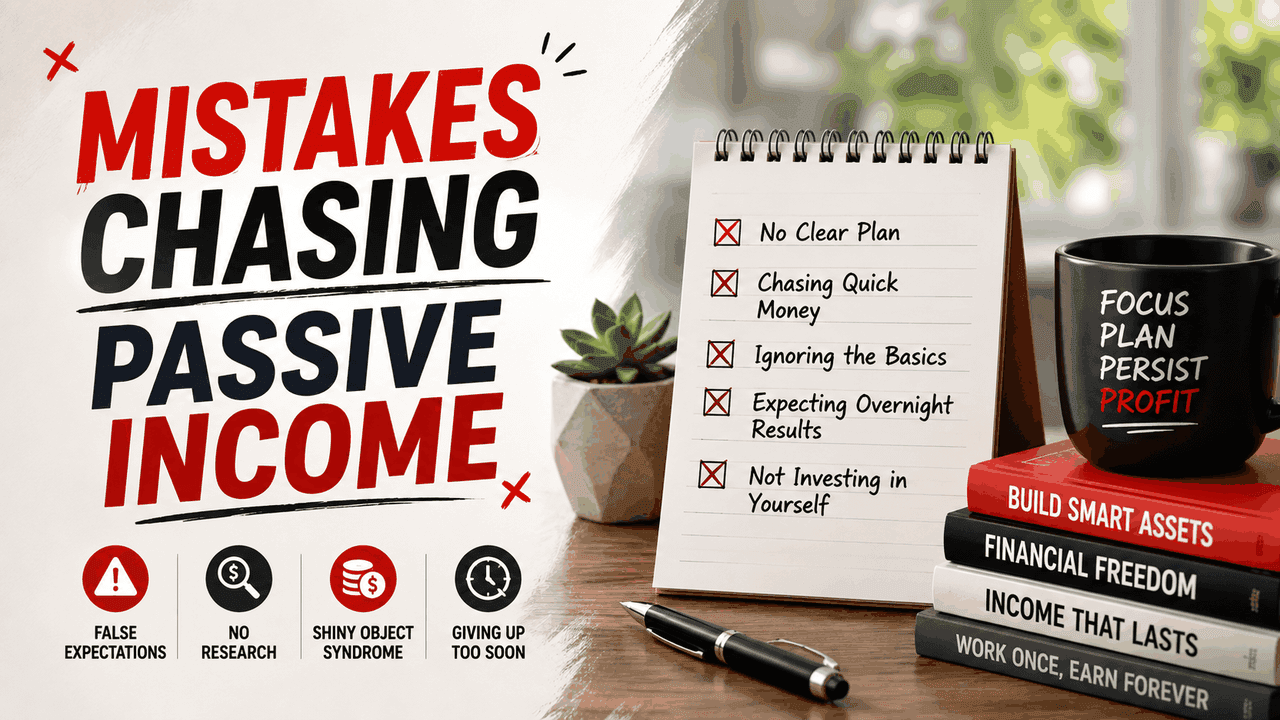
Common Mistakes Beginners Make With Passive Income
Starting with the wrong tier for their resources. A beginner with $100 who tries to buy a vending machine or invest in real estate crowdfunding will fail before they start. Match your idea to your actual capital, not your aspirational capital.
Expecting immediate results. Digital products take 2–6 weeks to get their first sale. Affiliate blogs take 3–12 months to generate commissions. Dividend investing takes years to produce meaningful monthly income. Beginners who quit in month two because they are not earning $1,000 yet are quitting exactly when the compounding curve is about to bend upward.
Chasing too many streams at once. Launching five passive income ideas simultaneously means mastering none. The most successful beginners pick one time-based stream and one capital-based stream, focus on both for 12 months, and only expand once one of them is producing consistent income.
Ignoring the tax implications. Passive income is taxable. Dividends may get favorable capital gains rates, but rental income, digital product sales, and affiliate commissions are generally taxed as ordinary income. Beginners who do not set aside 20–30% of their passive income for taxes get an unpleasant surprise at tax time.
Buying courses instead of doing the work. The passive income education industry is a multi-billion-dollar business, and most of it sells motivation rather than mechanics. A $997 course on "how to make passive income" is rarely worth more than 20 hours of free YouTube tutorials and one month of actual execution. Beginners who spend more time buying courses than building products will always be beginners.
Bottom Line
Beginner passive income is not about finding the one magic idea that prints money while you sleep. It is about matching the right idea to your actual starting point — your capital, your time, and your skills — and then doing the upfront work that "passive" always demands.
If you have zero capital, start with digital products, affiliate content, or print-on-demand. If you have $100–$500, add dividend ETFs, REITs, or a high-yield savings account to put your money to work. If you have $1,000–$5,000, consider real estate crowdfunding, vending machines, or renting out assets you already own.
The honest timeline for most beginners is $100–$300 per month by month 6, $300–$500 per month by month 12, and $1,000+ per month only after 18–36 months of consistent effort and reinvestment. That is not discouraging — it is realistic. And realistic expectations are what separate the 12% of people who actually earn meaningful passive income from the 88% who try, get frustrated, and quit before the compounding kicks in.
Pick one idea from Tier 1 and one from Tier 2. Start this week. Track your numbers honestly. And give it the 12 months the data says it actually takes.
Frequently Asked Questions
What are the best passive income ideas for beginners?
The best beginner passive income ideas are digital products (templates, guides, printables), affiliate marketing, print-on-demand, high-yield savings accounts, and dividend ETFs. These require low or no upfront capital, have proven demand in 2026, and can produce first income within 2–12 months depending on the stream.
How much money do I need to start earning passive income?
You can start with $0. Digital products, affiliate marketing, print-on-demand, and self-publishing on Amazon KDP all require no financial investment beyond a computer and internet connection. Capital-based streams like dividend investing require as little as $1 per share through fractional investing. The real requirement is upfront time and effort, not money.
How long does it take for a beginner to earn passive income?
Time-based streams like digital products and print-on-demand typically produce first sales within 2–6 weeks. Affiliate marketing and blogging take 3–12 months to generate meaningful commissions. Capital-based streams like dividends and REITs pay immediately but require significant capital to produce meaningful monthly income. Most beginners see $100–$300 per month by month 6 and $300–$500 per month by month 12.
Can I start passive income with no money?
Yes. Digital products, affiliate marketing, print-on-demand, and Amazon KDP all require zero upfront capital. The trade-off is significant upfront time investment — typically 20–60 hours before the first dollar arrives. If you have time but no money, these are your starting points.
What is the easiest passive income for beginners?
High-yield savings accounts are the easiest — zero effort after setup, guaranteed returns, and no expertise required. But the income is small. For meaningful returns with low barriers, dividend ETFs require only a brokerage account and basic research. For those with creative skills, digital products offer the highest earning potential per hour invested.
How many passive income streams should a beginner have?
Start with two: one time-based stream (like digital products or affiliate marketing) and one capital-based stream (like dividend ETFs or a HYSA). Master both for 12 months before adding a third. Beginners who launch five streams simultaneously typically master none.
Is passive income taxable for beginners?
Yes. Digital product sales, affiliate commissions, and rental income are generally taxed as ordinary income. Dividends may qualify for lower capital gains rates. Beginners should set aside 20–30% of passive income for taxes and consider consulting a tax professional once monthly passive income exceeds $500.
What passive income mistakes should beginners avoid?
The biggest mistakes are: starting with ideas that require more capital than you have, expecting immediate results, chasing too many streams at once, ignoring taxes, and spending more money on courses than on actually building products. The second-biggest mistake is quitting in month 3 when the growth curve is about to accelerate.
Can passive income replace my job as a beginner?
Not in year one. Replacing a full-time income requires either significant capital ($150,000+ invested at 4%) or 18–36 months of consistent effort building time-based streams. Beginners should treat passive income as a supplement first, then gradually grow it toward replacement level as it compounds.
What is the fastest passive income idea for beginners?
High-yield savings accounts and CDs produce income immediately. Among ideas that require effort, digital products and print-on-demand typically generate first sales within 2–6 weeks — faster than blogging, affiliate marketing, or dividend investing, which all take months to compound meaningfully.